How to Start Preparing for Emergencies: A Beginner's Step-by-Step Plan
A calm, budget-friendly plan for getting your household ready: know your local risks, make a plan, build a kit, and store water and food, one weekend at a time.
6 min readBeginner's roadmap
Preparedness isn't about expecting the worst. It's about making ordinary disruptions, like a storm, a blackout, or a boil-water notice, easier to handle. Work through these five steps at your own pace. Most households can cover the essentials in a month of weekends.
Find out which emergencies are most likely where you live, decide how your household will communicate, and choose meeting places.
Water comes first. Plan for at least one gallon per person per day, and work toward a two-week supply at home.
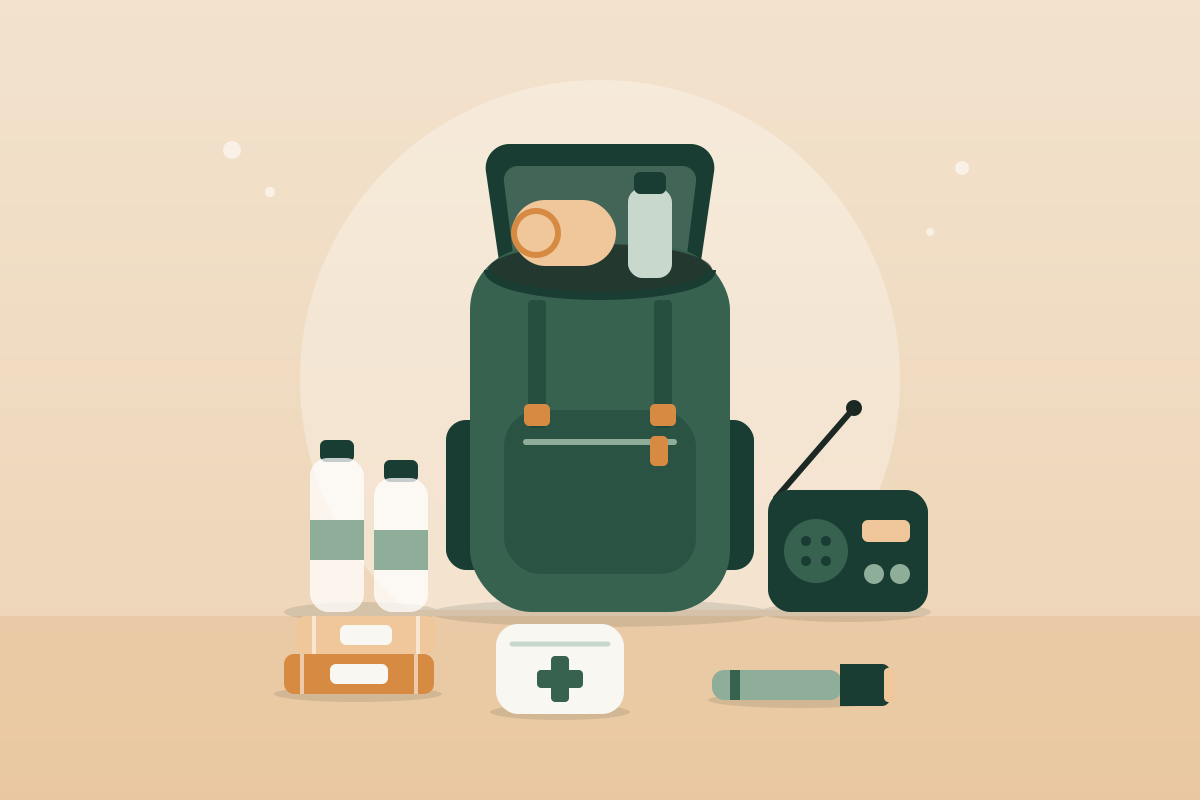
Pack a grab-and-go kit with water, food, light, a radio, first aid, medications, and copies of important documents.
Build up shelf-stable foods your household already likes, a little at a time, and rotate them so nothing goes to waste.
Keep lights, phones, and essential devices running safely, and know how to protect refrigerated food.
Get a personalized estimate for your household in under a minute.
A calm, budget-friendly plan for getting your household ready: know your local risks, make a plan, build a kit, and store water and food, one weekend at a time.
6 min readA 72-hour emergency kit checklist based on Ready.gov and Red Cross guidance, with additions for kids, pets, medications, and documents, plus a maintenance schedule.
5 min readBuild a two-week emergency food supply from foods your family already eats. Learn what to buy, how much, how to store it, and how to rotate it so nothing expires.
6 min read