Water PreparednessGuide
How to Purify Water in an Emergency: Boiling, Bleach, and Filters
How to make water safe to drink in an emergency: CDC boiling times, EPA bleach drops per gallon, which filters stop which germs, and when no method works.
By Prep & Survive TeamPublished 6 min read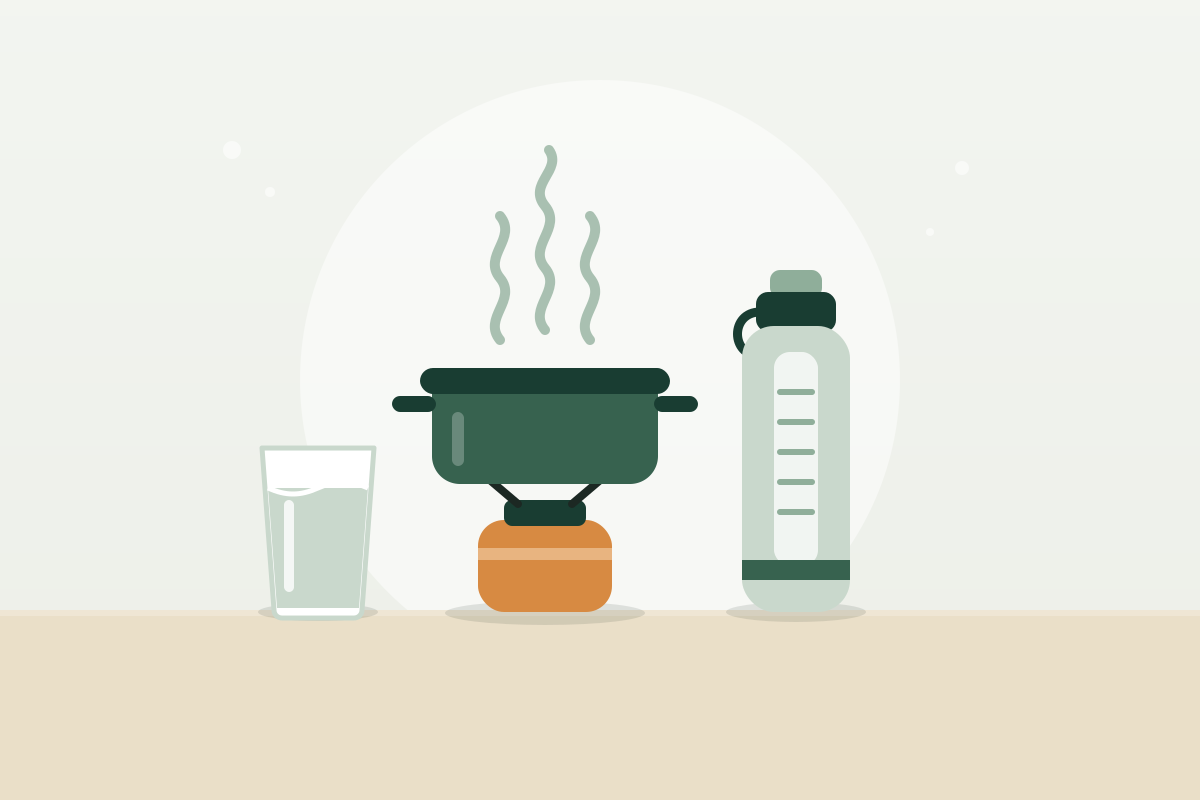
On this page
Key takeaways
- Boiling is the surest way to kill germs: bring clear water to a rolling boil for 1 minute, or 3 minutes at elevations above 6,500 feet.
- To disinfect with bleach, use plain unscented bleach: 8 drops of 6% bleach or 6 drops of 8.25% bleach per gallon of clear water, then wait 30 minutes.
- Double the bleach dose if water is cloudy, colored, or very cold.
- Most portable filters remove parasites and some bacteria but not viruses, so pair a filter with boiling or disinfection.
- Boiling and disinfection do not remove fuel, toxic chemicals, heavy metals, or salts. Use a different water source if chemical contamination is possible.
Stored water is your first line of defense. But if a storm, flood, or water main break lasts longer than your supply, or your utility issues a boil water advisory, you may need to treat water yourself.
The good news: the methods that work are simple and inexpensive. This guide covers the approaches recommended by the CDC and EPA, the exact amounts to use, and the situations where no home method is enough.
Start with the clearest water you can find
Every treatment method works better on clear water. Germs can hide inside particles, and dirt uses up disinfectant before it can do its job.
If water is cloudy:
- Let it stand so sediment settles to the bottom.
- Pour off the clear water on top, or filter it through a clean cloth, paper towel, or coffee filter.
- Then boil or disinfect it using the steps below.
A cloth or coffee filter only makes water clearer. It does not make water safe to drink on its own.
The EPA also advises not to use water that has floating material in it, a dark color, or a questionable odor. Find a better source if you can.
Method 1: Boiling (most reliable)
Boiling kills disease-causing bacteria, viruses, and parasites. If you have a heat source and fuel, it is the method to choose.
1 minute
rolling boil for clear water
3 minutes
at elevations above 6,500 feet (CDC)
- Bring clear water to a rolling boil (big bubbles that keep coming even when stirred) for 1 minute.
- At elevations above 6,500 feet, boil for 3 minutes, because water boils at a lower temperature at altitude.
- Let the water cool naturally.
- Store it in clean, sanitized containers with tight covers.
Boiled water can taste flat. The EPA suggests adding a pinch of salt per quart or liter, or pouring it back and forth between two clean containers a few times to add air.
Never boil water indoors on a grill or camp stove during an outage. Use your regular kitchen stove if it works, or cook outside. See our power outage checklist for carbon monoxide safety.
Method 2: Disinfecting with household bleach
When you cannot boil water, regular household bleach kills most germs, including bacteria and viruses. The CDC notes that bleach does not work well against parasites such as Giardia and Cryptosporidium, so boiling is still better when it is an option, and filtering water first helps.
What bleach to use
- Use regular, unscented liquid chlorine bleach. The label lists sodium hypochlorite as the active ingredient, usually 6% or 8.25%.
- Do not use scented, color-safe, or bleach with added cleaners.
- Use bleach that is fresh, ideally stored at room temperature for less than one year. Bleach loses strength over time.
- Use a clean medicine dropper to measure.
How much bleach per gallon
These amounts come from the EPA's emergency disinfection table. The cloudy-water columns double the clear-water dose, as the EPA directs for water that is cloudy, colored, or very cold.
| Volume of water | 6% bleach (clear) | 8.25% bleach (clear) | 6% bleach (cloudy or cold) | 8.25% bleach (cloudy or cold) |
|---|---|---|---|---|
| 1 quart or liter | 2 drops | 2 drops | 4 drops | 4 drops |
| 1 gallon | 8 drops | 6 drops | 16 drops | 12 drops |
| 2 gallons | 16 drops (1/4 teaspoon) | 12 drops (1/8 teaspoon) | 32 drops (1/2 teaspoon) | 24 drops (1/4 teaspoon) |
| 4 gallons | 1/3 teaspoon | 1/4 teaspoon | 2/3 teaspoon | 1/2 teaspoon |
| 8 gallons | 2/3 teaspoon | 1/2 teaspoon | 1 1/3 teaspoons | 1 teaspoon |
Step by step
- Filter or settle cloudy water first.
- Add the amount of bleach shown in the table.
- Stir well and let it stand for 30 minutes.
- Smell the water. It should have a slight chlorine odor.
- If it does not, repeat the dose and let it stand for another 15 minutes before use.
- If the chlorine taste is too strong, pour the water between clean containers and let it stand for a few hours.
Method 3: Water treatment tablets and iodine
Water treatment tablets are compact and easy to keep in a go-bag or car. They typically contain chlorine, iodine, or chlorine dioxide. Follow the package directions exactly, including the wait time, which can be several hours for some products.
- Chlorine dioxide tablets kill Giardia and are somewhat effective against Cryptosporidium, according to the CDC. Filtering first is still the safest approach.
- Iodine, like bleach, kills bacteria and viruses but does not work well against parasites. The EPA's emergency method is 5 drops of 2% tincture of iodine per quart or liter of clear water, or 10 drops if cloudy or colored, then wait at least 30 minutes. The CDC advises people who are pregnant, have thyroid problems, or are sensitive to iodine to avoid iodine-treated water, and says no one should drink it for more than a few weeks at a time.
Tablets have expiration dates, so check them when you rotate your kit.
Method 4: Portable water filters
Filters physically strain out germs. They are popular for camping and go-bags, but they do not all do the same job, and the key number is the absolute pore size.
| Filter type (per CDC) | Parasites | Bacteria | Viruses |
|---|---|---|---|
| 1 micron or smaller, or NSF 53 or 58 certified for cyst reduction | Yes | Not all | No |
| 0.3 micron or smaller | Yes | Yes | No |
| Reverse osmosis | Yes | Yes | Yes |
Most portable filters do not remove viruses. In a disaster, especially after flooding where sewage may be present, combine filtering with boiling or chemical disinfection. The CDC's order is filter first, then disinfect: the filter removes parasites that chemicals struggle with, and the disinfectant handles viruses the filter misses.
As of November 2026, portable filters for hiking and emergency use typically cost $20 to $100, while countertop gravity systems typically run $150 to $400. Look for clear claims about absolute pore size or NSF certification rather than vague marketing language.
What does not work
Some common ideas do not make water safe:
- Cloth, coffee filter, or sand alone. These clear the water but do not remove germs reliably.
- Freezing. Many germs survive freezing.
- Letting water sit. Settling helps clarity but does not disinfect.
- Scented, color-safe, or "splash-less" bleach with additives. Use only plain, unscented bleach.
- Boiling or disinfecting chemically contaminated water. These steps target germs, not chemicals (see below).
Distillation, which collects the steam from boiling water as it condenses, removes salts and most other impurities, according to Ready.gov. It is slow and impractical for most households but can help in a pinch.
Your next step
Put a small water treatment kit together today: a bottle of fresh, unscented bleach, a clean medicine dropper, a printed copy of the bleach table above, and some coffee filters. Store it with your emergency supplies.
- Figure out your baseline with how much water to store.
- Add water treatment to your go-bag using our guide to building a 72-hour emergency kit.
Frequently asked questions
How long do you need to boil water to make it safe?
The CDC says to bring clear water to a rolling boil for 1 minute. At elevations above 6,500 feet, boil for 3 minutes. Let it cool before drinking.
How much bleach do you add to a gallon of water?
The EPA says to add 8 drops of 6% unscented bleach or 6 drops of 8.25% bleach per gallon of clear water. Stir, wait 30 minutes, and check for a slight chlorine smell. Double the amount if the water is cloudy, colored, or very cold.
Do water filters remove viruses?
Most portable filters do not. According to the CDC, filters with a pore size of 1 micron or smaller remove parasites, and 0.3 micron or smaller also remove bacteria, but neither removes viruses. Reverse osmosis filters remove all three.
Can you purify water contaminated with gasoline or chemicals?
No. The CDC warns that water containing fuel, toxic chemicals, or radioactive material cannot be made safe by boiling or disinfecting. Use bottled water or another safe source and contact your local health department.
Can I use scented or splash-less bleach to disinfect water?
No. Use only regular, unscented liquid chlorine bleach. The EPA advises against scented, color-safe, or bleaches with added cleaners.
Sources
- How to Make Water Safe in an Emergency — Centers for Disease Control and Prevention
- Emergency Disinfection of Drinking Water — U.S. Environmental Protection Agency
- Water Treatment Options When Hiking, Camping or Traveling — Centers for Disease Control and Prevention
- Water — Ready.gov
The Prep & Survive team researches, writes, and fact-checks every guide against current guidance from FEMA, Ready.gov, the CDC, the American Red Cross, and USDA food safety experts. We update articles when official recommendations change.
How we research and fact-checkGet one practical preparedness step every other week
Join The Ready Brief for checklists, seasonal reminders, and honest gear advice.