Water PreparednessGuide
How Much Water Should You Store for an Emergency?
Store at least one gallon per person per day: 3 days minimum, 2 weeks if possible. How to calculate your household's needs, pick safe containers, and rotate water.
By Prep & Survive TeamPublished 6 min read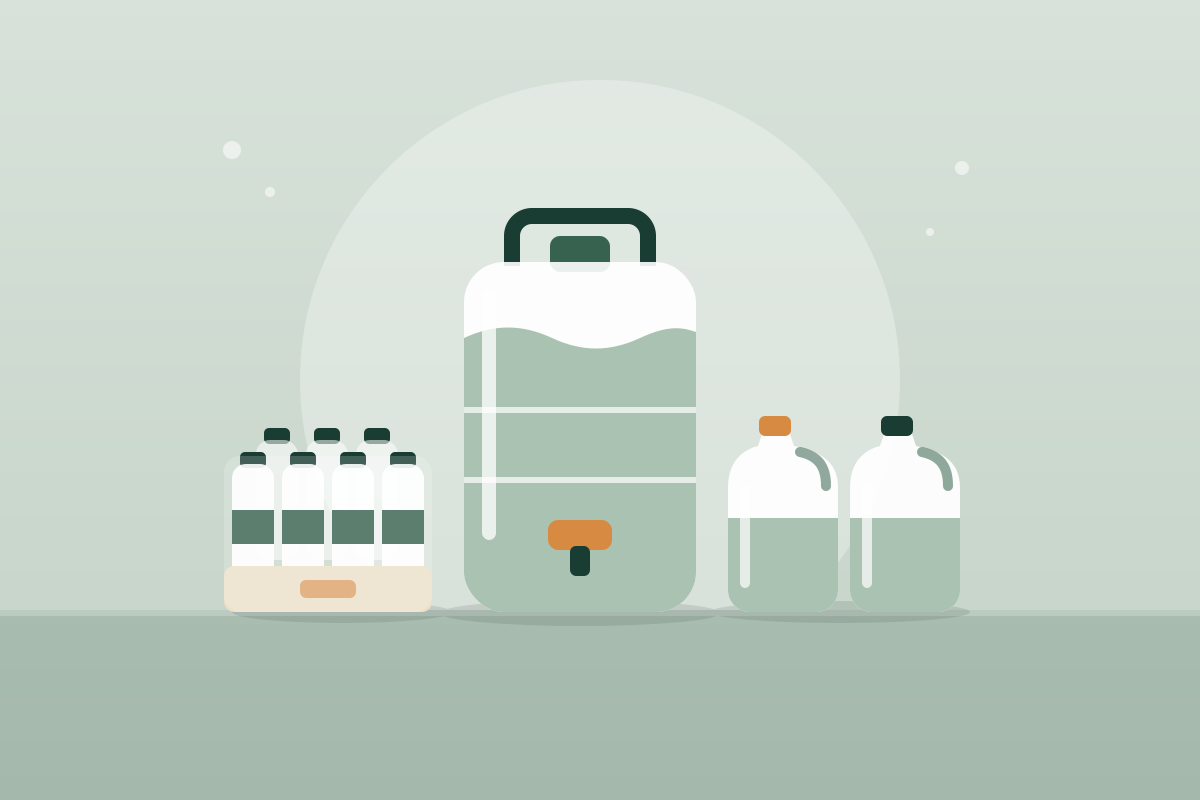
On this page
Key takeaways
- Store at least one gallon of water per person per day for drinking and sanitation.
- The CDC recommends at least a 3-day supply and a 2-week supply if possible; the American Red Cross suggests 3 days for evacuation and 2 weeks for home.
- Store more for hot climates, pregnant or nursing women, children, people who are sick, and pets, since in very hot weather water needs can double.
- Use unopened commercially bottled water or food-grade containers, and avoid milk or juice jugs, glass, and anything that held chemicals.
- Replace self-filled water every six months, and follow the expiration or use-by date on store-bought water.
Water is the most important supply you can store. A water main break, hurricane, earthquake, or boil-water advisory can leave tap water unavailable or unsafe for days. Grocery store shelves often empty quickly when a storm is in the forecast.
The good news is that water is cheap, it keeps well when stored correctly, and the math is simple. Here is how much to store, what to store it in, and how to keep it fresh.
1 gallon
per person, per day
3 days
minimum supply (CDC)
2 weeks
supply to aim for at home
6 months
to replace self-filled water
The baseline: one gallon per person per day
Ready.gov, the CDC, and the American Red Cross all use the same rule: store at least one gallon of water per person per day. That gallon covers drinking plus basic sanitation, like brushing teeth and washing hands.
Ready.gov notes that a normally active person needs about three-quarters of a gallon of fluid a day just to drink. The rest is a small margin for hygiene and food preparation. It isn't enough for bathing or flushing toilets, so plan on other sources for those.
How many days to store
- 3 days minimum. The CDC recommends at least a 3-day supply, and the Red Cross uses 3 days as the target for evacuation. This is the water that goes in your 72-hour emergency kit.
- 2 weeks for home. The CDC suggests a 2-week supply if possible, and the Red Cross recommends 2 weeks for sheltering at home. Major disasters can disrupt water service for longer than a few days.
If 2 weeks isn't practical right now, start with 3 days and add to it over time. FEMA's advice is to store as much as you can.
How much your household needs
Multiply the number of people by the number of days. Here are the minimums at one gallon per person per day. A family of four needs 12 gallons for 3 days, 56 gallons for 2 weeks, and 120 gallons for 30 days:
| Household size | 3-day supply | 2-week supply | 30-day supply |
|---|---|---|---|
| 1 person | 3 gallons | 14 gallons | 30 gallons |
| 2 people | 6 gallons | 28 gallons | 60 gallons |
| 3 people | 9 gallons | 42 gallons | 90 gallons |
| 4 people | 12 gallons | 56 gallons | 120 gallons |
| 5 people | 15 gallons | 70 gallons | 150 gallons |
| 6 people | 18 gallons | 84 gallons | 180 gallons |
Water weighs about 8.3 pounds per gallon. A 3-day supply for one person weighs about 25 pounds, which matters if you need to carry it or keep it on a shelf.
When to store more
The one-gallon rule is a minimum. Ready.gov and the CDC recommend storing more for:
- Hot climates and heat waves. Ready.gov notes that in very hot temperatures, water needs can double.
- Pregnant and nursing women.
- Children.
- People who are sick, especially with fever, vomiting, or diarrhea, and anyone with medical needs that use water.
- Cooking. If your food supply includes rice, pasta, or dried beans, add water for preparation.
Pets
Ready.gov recommends keeping several days of water for each pet, along with a bowl. Needs depend on the animal's species, size, and activity, and on the weather. The simplest way to plan is to measure what your pet drinks on a normal day, multiply by the number of days, and add a margin for heat. Your veterinarian can advise on animals with special needs.
Choosing containers
Commercially bottled water: the simplest option
FEMA and the CDC both describe unopened, commercially bottled water as the safest and most reliable emergency supply. Keep it in its original sealed container, store it in a cool, dark place, and observe the expiration or use-by date printed on it. Cases of bottles and 1-gallon jugs are easy to stack and rotate.
Filling your own containers
If you'd rather store tap water, use the right container:
| Container | Good for | Notes |
|---|---|---|
| Food-grade water storage containers | Most households | Look for food-grade or FDA-approved labeling and a tight-sealing cap. Commonly sold in 5- to 7-gallon sizes. |
| 2-liter plastic soda bottles | Budget storage | FEMA's suggestion for reuse. Clean and sanitize first. |
| Large food-grade barrels | Large households with floor space | Heavy when full. Need a pump or siphon and a level, sturdy spot. |
How to clean and fill containers
The CDC recommends these steps for containers that aren't brand-new, sealed water containers:
- Wash the container with dishwashing soap and water, then rinse it completely.
- Make a sanitizing solution of 1 teaspoon of unscented liquid household chlorine bleach in 1 quart (4 cups) of water.
- Cap the container and shake so the solution touches every inside surface.
- Wait at least 30 seconds, then pour the solution out.
- Let the container air-dry.
- Fill it with clean tap water. Water from a chlorinated public utility needs nothing added.
- Seal it tightly without touching the inside of the cap, and label it with the fill date.
If your water comes from a private well or another untreated source, it needs to be disinfected before you store it. See how to purify water in an emergency for safe methods. Use the bleach amounts in that guide, which follow current EPA instructions; some older FEMA publications list a different dose.
Storing and rotating your water
Where you keep water affects how long it stays good. The CDC recommends:
- A cool spot, ideally between 50°F and 70°F
- Out of direct sunlight
- Away from toxic substances such as gasoline and pesticides
A basement, closet floor, or the back of a pantry usually works. Don't stack heavy containers higher than your shelving is rated for.
Rotation schedule:
- Self-filled water: Replace every six months, as Ready.gov and the CDC recommend. Use the old water for plants or cleaning, then sanitize the containers again and refill them.
- Commercial bottled water: Follow the date on the package, and use the oldest cases first.
Many households refill stored water when the clocks change in spring and fall.
Water already in your home
In an emergency, FEMA identifies safe water sources inside your home:
- Your water heater tank, which often holds dozens of gallons. FEMA says to make sure the electricity or gas is off before opening the drain at the bottom, and to refill the tank before turning it back on. If the gas was shut off, a professional may be needed to restore it.
- Water in your pipes, which you can drain from the lowest faucet after opening a higher one to let air in
- Ice cubes
Do not drink water from toilet tanks or bowls, radiators, waterbeds, or swimming pools and spas. If officials report broken water or sewer lines, shut off your home's main water valve to keep contaminated water out of your pipes. Make sure adults in your household know where that valve is.
Next steps
Pick up enough bottled water for 3 days for everyone in your home this week, then work toward 2 weeks.
- Learn how to purify water in an emergency as a backup to stored water
- Pair your water with food using our guide to starting an emergency food pantry
- Put a portable supply in your 72-hour emergency kit
Frequently asked questions
How much water should I store per person?
Store at least one gallon per person per day for drinking and sanitation. For a 2-week supply, that is 14 gallons per person, and more if you live in a hot climate or have people with higher needs.
How long can you store tap water?
The CDC and Ready.gov recommend replacing water you bottle yourself every six months. Store it in clean, sanitized food-grade containers in a cool, dark place.
Does bottled water expire?
Unopened commercially bottled water is the safest choice for emergency storage. FEMA and the CDC advise following the expiration or use-by date printed on the container and keeping it sealed until you need it.
Can I store water in old milk jugs?
No. FEMA guidance explains that milk proteins and fruit sugars cannot be fully removed from these jugs and can support bacterial growth.
How much water do pets need in an emergency?
Ready.gov advises storing several days of water for each pet, along with a bowl. Needs vary by species, size, and weather, so ask your veterinarian or measure how much your pet drinks on a typical day.
Corrections
- : Removed a claim, wrongly attributed to FEMA, that milk-jug plastic isn't designed for long-term storage. FEMA says that about cardboard containers.
Sources
- Water — Ready.gov
- How to Create an Emergency Water Supply — Centers for Disease Control and Prevention
- Food and Water in an Emergency — FEMA and American Red Cross
- Survival Kit Supplies — American Red Cross
The Prep & Survive team researches, writes, and fact-checks every guide against current guidance from FEMA, Ready.gov, the CDC, the American Red Cross, and USDA food safety experts. We update articles when official recommendations change.
How we research and fact-checkGet one practical preparedness step every other week
Join The Ready Brief for checklists, seasonal reminders, and honest gear advice.