Survival GearGuide
How to Choose an Emergency Radio: NOAA Weather Alerts, Power Options, and Features
How to pick an emergency radio: NOAA Weather Radio and SAME alerts, battery vs. hand crank vs. solar power, which bands matter, and typical price ranges.
By Prep & Survive TeamPublished 6 min read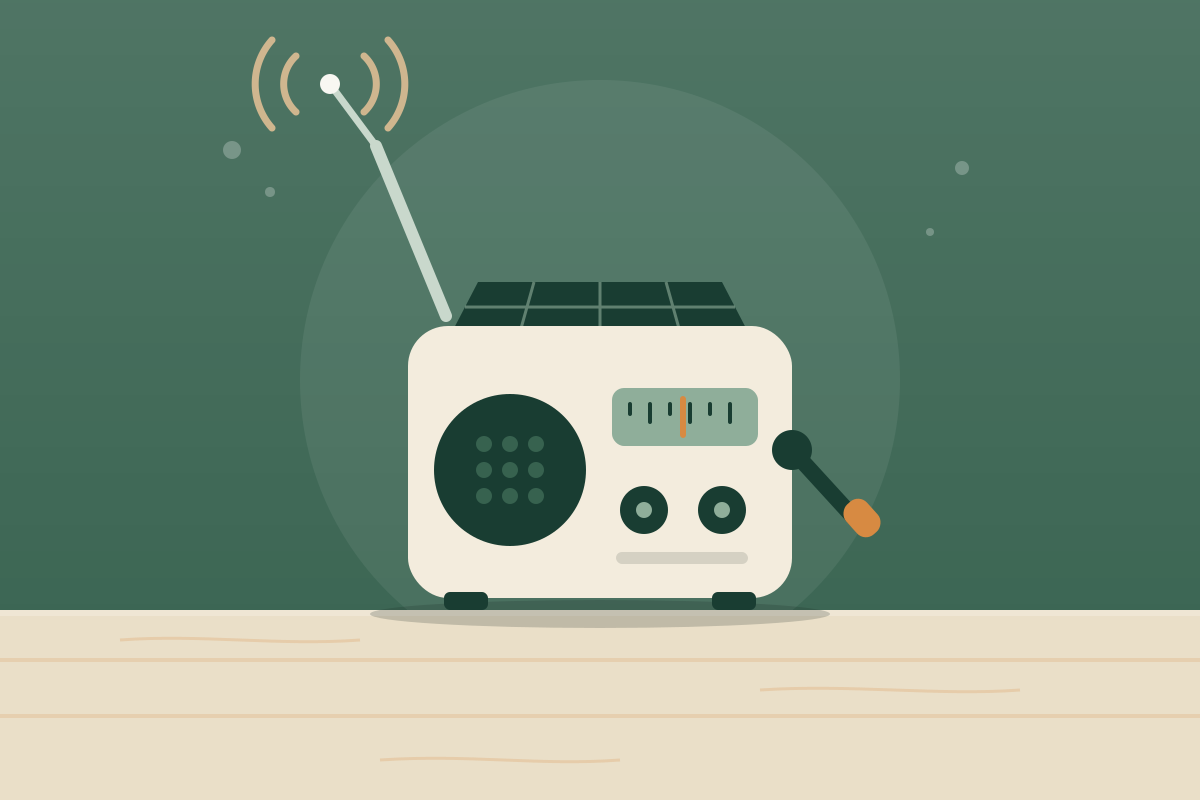
On this page
Key takeaways
- Ready.gov recommends a battery-powered or hand crank radio and a NOAA Weather Radio with tone alert in every basic emergency kit.
- NOAA Weather Radio broadcasts National Weather Service warnings and other hazard alerts 24/7 on seven VHF frequencies from 162.400 to 162.550 MHz.
- A SAME-capable radio only sounds alerts for the counties you program, using six-digit codes from the National Weather Service.
- The National Weather Service recommends looking for receivers with the Public Alert or NOAA Weather Radio All Hazards logo.
- Plan on replaceable batteries as your main power source; hand cranks and small solar panels are useful backups, not substitutes.
When the power is out and cell networks are overloaded, a radio is often the most reliable way to hear official warnings and local news. That's why Ready.gov's basic disaster supplies list includes a "battery-powered or hand crank radio and a NOAA Weather Radio with tone alert."
Emergency radios range from simple tabletop alert units to portable radios loaded with flashlights, phone chargers, and solar panels. This guide explains which features matter, which are nice-to-have, and how to set up a weather radio so it actually wakes you when a warning is issued.
Start with NOAA Weather Radio
NOAA Weather Radio All Hazards is a nationwide network of radio stations that broadcast continuous weather information directly from the nearest National Weather Service office. According to the NWS, the network has more than 1,000 transmitters covering all 50 states, adjacent coastal waters, Puerto Rico, the U.S. Virgin Islands, and the U.S. Pacific Territories.
It isn't only for weather. Stations also carry warnings and post-event information for other hazards, including earthquakes, chemical releases, oil spills, AMBER alerts, and 911 telephone outages.
7
NOAA Weather Radio frequencies (162.400–162.550 MHz)
1,000+
transmitters nationwide
About 40 miles
typical range of a full-power transmitter over level terrain
You can't hear these broadcasts on an ordinary AM/FM radio. You need a receiver or scanner that tunes the VHF weather band, often labeled "WX" or "Weather." The NWS recommends a radio that can tune all seven frequencies so it works wherever you are.
Why the alert tone matters
The NWS sends a 1050 Hz tone before most warnings and many watches. A radio with tone alert stays silent until that signal arrives, then sounds an alarm, even with the volume turned down. The NWS calls the alarm tone the most desirable feature on a weather radio, and it is what makes a weather radio useful overnight, when many tornado and flash flood warnings catch people asleep.
SAME: alerts for your county only
Older weather radios sounded the alarm for every warning across the transmitter's whole coverage area, which could include several counties. Specific Area Message Encoding (SAME) fixes that. Each alert carries a digital code identifying the event type, the affected counties, and when the alert expires. A SAME radio only sounds for the areas you choose.
How to program a SAME radio
- Find your six-digit SAME code. The NWS publishes codes for every state, county, and territory online. You can also call 1-888-NWR-SAME (1-888-697-7263) for a voice menu, or text "Go" to the same number.
- Enter the code following your radio's manual. Many radios accept several codes, which is useful if you live near a county line.
- Select the right station. The NWS warns against picking a louder or clearer station that isn't designated for your county, because you may not receive your alerts.
- Test it. Most NWS offices run a weekly test. Check your local office's schedule and confirm the radio responds.
Power options: batteries, AC, hand crank, and solar
A radio is only useful if it has power when the grid doesn't. Here's how the common options compare.
| Power source | Strengths | Limitations | Best role |
|---|---|---|---|
| AC adapter with battery backup | Always on; batteries take over in an outage | Not portable unless it also runs on batteries | Bedside or kitchen weather alert radio |
| Replaceable batteries (AA, AAA) | Predictable runtime; easy to stockpile; swap in seconds | You must store and rotate spares | Primary power for portable radios |
| Built-in rechargeable battery | Can be charged by USB, crank, or solar | Wears out over the years; may be hard to replace | Convenient day-to-day power |
| Hand crank | Works with no fuel or sun | Limited listening time per minute of cranking; cranks can break | Backup only |
| Small built-in solar panel | Free top-ups in daylight | Slow charging, especially in cloudy weather | Backup only |
The NWS specifically recommends weather radios with both an AC adapter and a battery compartment, and notes that battery backup can be crucial because power outages often happen during storms.
Bands: what you actually need
- NOAA Weather Radio (WX): Essential. This is where official watches and warnings come first.
- AM: Very useful. AM signals travel long distances, especially at night, and local news stations often provide continuing coverage during major storms.
- FM: Useful for local news. Broadcast stations also relay Emergency Alert System messages, which can include NWS warnings.
- Shortwave: Optional. Interesting for hobbyists and long-distance news, but rarely needed for local emergencies.
- Two-way radio bands: Different category of equipment. Listening-only emergency radios don't transmit.
Features that matter vs. gimmicks
Worth paying for
- Public Alert or NOAA Weather Radio All Hazards logo. The NWS recommends receivers with these logos because they meet technical standards. Public Alert devices are required to include SAME and the alarm tone.
- SAME with multiple county codes.
- Tone alert with adjustable alarm volume.
- Battery backup on any plug-in radio.
- External antenna jack if you're in a fringe reception area. The NWS says an antenna designed for VHF TV or FM radio should work.
- Accessory jack for strobe lights or bed shakers if anyone in your household is deaf or hard of hearing.
- Event selection (sometimes called event blocking), which lets you silence alert types that don't apply to you, such as coastal warnings inland.
- Easy-to-read display and a headphone jack, which helps save batteries and keep a quiet house calm.
Nice extras, not deciding factors
- Built-in flashlight. Handy, but usually dimmer than a dedicated flashlight.
- USB phone charging. Real but limited. A small radio battery can add only a modest charge to a phone, and hand-cranking a phone charge is slow work. A separate power bank is more practical.
- Water resistance. Useful for outdoor use and evacuations; check the stated rating rather than marketing language.
Be skeptical of
- Long lists of extra functions (compass, whistle, SOS siren, bottle opener) that add bulk and more ways to fail.
- Unspecified "lifetime" or "unlimited" power claims. Every battery degrades, and crank and solar charging are slow.
- Very cheap no-name weather radios. The NWS notes that the least expensive models are generally the most susceptible to reception problems.
Typical price ranges by category
Prices vary widely by features and retailer. These are approximate US ranges as of November 2026.
| Category | Typical price | Good for |
|---|---|---|
| Tabletop weather alert radio with SAME | About $30–$100 | Bedside alerts at home |
| Portable multi-power radio (batteries, crank, solar, AM/FM/WX) | About $25–$100 | Go-bags and power outages |
| Portable radio with shortwave and better audio | About $60–$200+ | Hobbyists and long-distance listening |
Many households end up with two radios: a plug-in SAME weather alert radio by the bed and a portable battery or crank radio in the 72-hour emergency kit.
Where to keep it and how to maintain it
- Check coverage before you buy. The NWS publishes county coverage maps. Reception can be poor in mountain valleys, forests, and among large buildings, sometimes well short of the typical 40-mile range.
- Place it where you'll hear it. A bedroom or central hallway works best for a weather alert radio.
- Test monthly. Turn it on, check reception, and confirm it still responds to the weekly NWS test.
- Store batteries separately in a portable radio you rarely use, to prevent leaks, and keep fresh spares nearby.
- Charge built-in batteries every few months if the manufacturer recommends it.
- Update SAME codes when you move.
Next steps
Pick the radio role you're missing first. If you have nothing, a SAME weather alert radio for overnight warnings is the biggest upgrade; then add a portable battery radio to your kit.
Frequently asked questions
What is the difference between a weather radio and an emergency radio?
A weather alert radio receives NOAA Weather Radio and can sound an alarm when a warning is issued, even while silent. A portable emergency radio usually adds AM/FM, flashlight, and backup power such as a hand crank or solar panel. Many households benefit from one of each.
How do I find my SAME code for a weather radio?
The National Weather Service lists six-digit SAME codes for every county online. You can also call 1-888-NWR-SAME (1-888-697-7263) for a voice menu or text the word Go to that number.
Do hand crank radios really work?
Yes, but cranking usually produces limited listening time for the effort, and built-in rechargeable batteries wear out over the years. Treat a crank as a backup and keep spare disposable batteries for longer outages.
How far does NOAA Weather Radio reach?
According to the National Weather Service, a full-power transmitter reaches about 40 miles over level terrain. Hills, mountains, forests, and large buildings can reduce reception considerably.
Do I need a shortwave radio for emergencies?
Most households don't. Local AM/FM stations and NOAA Weather Radio carry the official local information you need. Shortwave is mainly useful to hobbyists and people who want long-distance news.
Sources
- NOAA Weather Radio All Hazards — National Weather Service
- Using SAME — National Weather Service
- NWR Receivers — National Weather Service
- Build a Kit — Ready.gov
The Prep & Survive team researches, writes, and fact-checks every guide against current guidance from FEMA, Ready.gov, the CDC, the American Red Cross, and USDA food safety experts. We update articles when official recommendations change.
How we research and fact-checkGet one practical preparedness step every other week
Join The Ready Brief for checklists, seasonal reminders, and honest gear advice.