Survival GearGuide
Emergency Lighting Guide: Flashlights, Headlamps, Lanterns, and Batteries
How to choose emergency lighting for power outages: flashlights vs. headlamps vs. lanterns, lumens and runtime, battery types, and why to skip candles.
By Prep & Survive TeamPublished 5 min read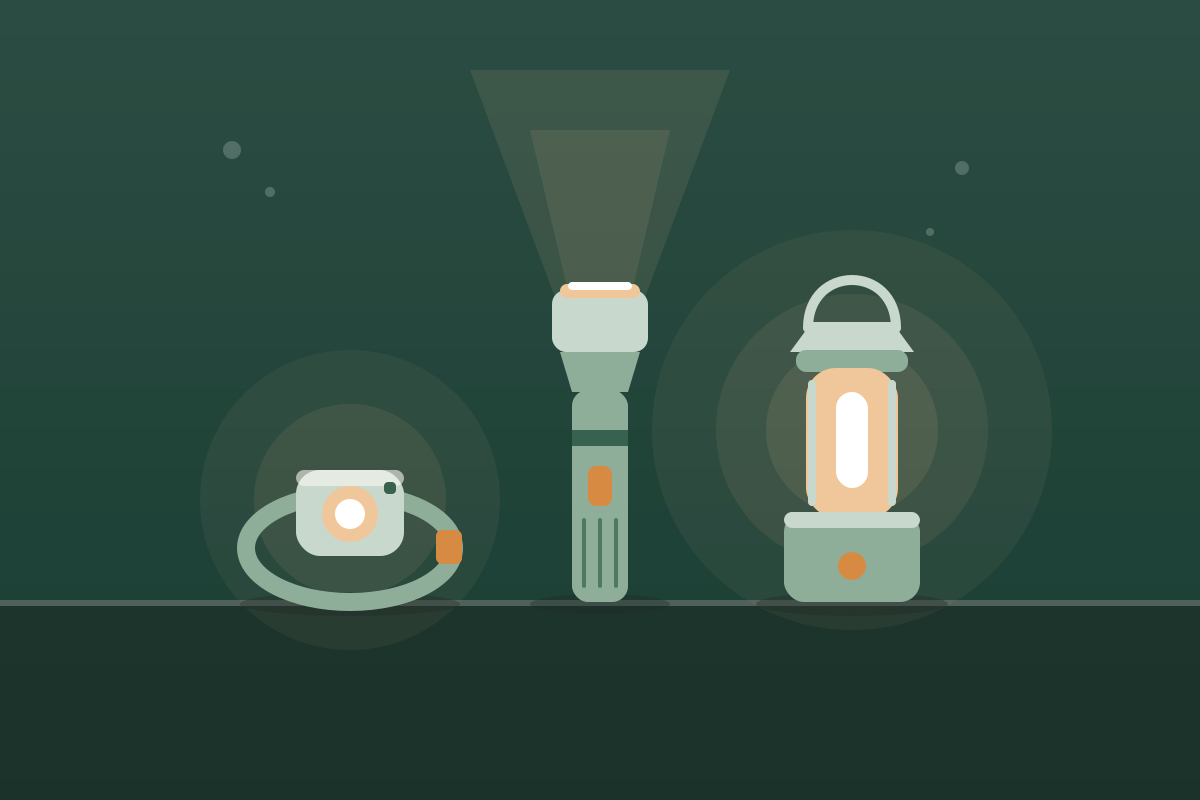
On this page
Key takeaways
- Ready.gov recommends having a flashlight for every member of your household for power outages.
- The U.S. Fire Administration advises using flashlights, not candles, during a power outage.
- A practical setup is a flashlight per person, a headlamp for hands-free tasks, and a battery lantern for each main living area.
- Lumen and runtime ratings under the ANSI/PLATO FL 1 standard let you compare lights; runtime is measured until output falls to 10 percent of its starting level.
- Lithium AA and AAA batteries handle cold and long storage better than alkaline; rechargeables work well for lights you use regularly.
When the power goes out at night, the first thing everyone reaches for is light. Ready.gov's power outage guidance is simple: have flashlights for every household member. Getting it right means having the right kinds of lights, in the right places, with batteries that actually work when you need them.
This guide compares flashlights, headlamps, and lanterns, explains what lumen and runtime ratings mean, walks through battery choices, and covers the safety reason to keep candles out of your outage plan.
Flashlights vs. headlamps vs. lanterns
Each type of light solves a different problem. Most households are best served by a mix.
| Light | Best for | Strengths | Limitations |
|---|---|---|---|
| Flashlight | Moving around, searching, checking outside, signaling | Focused beam, simple, durable | Ties up one hand |
| Headlamp | Cooking, first aid, reading, repairs, caring for kids | Hands-free; light goes where you look | Can glare in others' eyes; less throw than a large flashlight |
| Lantern | Lighting a room for the whole family | Wide, even light; good for meals and games | Bulkier; not great for walking outdoors |
| Flameless candle or small area light | Night lights in hallways and bathrooms | Low power use; very long runtime | Too dim for tasks |
A practical household setup
Suggested emergency lighting for a household
0 of 6
Lumens, beam, and runtime: reading the specs
Many flashlights, headlamps, and lanterns are rated under ANSI/PLATO FL 1, a voluntary industry standard for basic performance. If a package shows FL 1 icons, you can compare these numbers across brands.
- Light output (lumens): Total light the device produces, measured shortly after it's switched on with fresh batteries.
- Runtime: How long the light runs until output drops to 10 percent of the starting level. Many lights dim gradually, so you may see useful light for a while beyond the bright initial level, but not at full brightness.
- Beam distance: How far the beam reaches with usable brightness. Matters for searching a yard; less important indoors.
- Impact resistance and water resistance: Drop height and water protection ratings.
How much light do you need?
These are general guidelines for outage use, not hard rules:
| Task | Approximate output |
|---|---|
| Night light in a hallway or bathroom | 5–20 lumens |
| Reading, cooking, first aid (headlamp) | 50–200 lumens |
| Lighting a room (lantern) | 100–400 lumens |
| Moving around the house, checking outside (flashlight) | 100–300 lumens |
| Searching a yard or looking for a house number | 300 lumens and up |
Battery chemistry: alkaline vs. lithium vs. rechargeable
Your lights are only as reliable as their batteries. Here's how the common options compare. Storage life varies by manufacturer, so check the date printed on the package.
| Battery type | Strengths | Limitations | Best use |
|---|---|---|---|
| Alkaline (AA, AAA, C, D) | Inexpensive; sold everywhere | Can leak over time; weaker in cold; output drops as they drain | Indoor lights and spares you rotate |
| Lithium primary (AA, AAA) | Lighter; strong cold-weather performance; long storage life; generally less prone to leaking | Cost more per battery | Car kits, go-bags, lights you rarely use |
| Rechargeable NiMH (AA, AAA) | Reusable; low-self-discharge versions hold charge for months | Need a charger and power to recharge | Lights you use often |
| Built-in lithium-ion | Convenient USB charging; often high output | Must be kept charged; can't swap in spares when empty | Everyday-carry flashlights and headlamps |
Battery tips that prevent failures
- Standardize. Choose lights that use the same battery size (often AA) as your emergency radio so spares are interchangeable.
- Remove batteries from lights in long-term storage to prevent leaks and corrosion, and tape a set of spares to the light or store them in the same bag.
- Don't mix old and new batteries, or different types, in the same device.
- Store spares in a cool, dry place in their original packaging or a battery case, so the terminals can't touch metal objects.
- Keep rechargeable lights topped up. Charge them every few months and after each use. A power bank or portable power station can recharge them during an outage.
- Follow the manufacturer's charging instructions for lithium-ion devices and use the charger designed for them.
Why candles don't belong in your outage plan
Candles feel like the natural power-outage light, but fire safety agencies are clear on this. The U.S. Fire Administration says to use flashlights, not candles, during a power outage, and its severe weather guidance says to never use candles for emergency lighting. On average, about 20 home candle fires are reported each day, according to National Fire Protection Association figures cited by the USFA.
Outages make candles riskier than usual: they tend to burn for hours in dark rooms, around tired people and curious kids and pets, where they're easier to knock over or forget.
Fuel-burning lanterns are for outdoors
Propane, white gas, and kerosene lanterns produce carbon monoxide. CDC guidance warns never to use a lantern or portable camping stove inside a home, tent, or camper. Indoors, stick to battery-powered lights. Also, if you smell or hear a gas leak, the CPSC advises leaving immediately and not operating electronics, such as lights or phones, until you're outside.
Storing and maintaining your lights
Twice-a-year lighting check
0 of 6
Store lights where you'll reach them in the dark: bedside tables, a kitchen drawer, the hall closet near your other supplies. Keep a dedicated set in your emergency kit so household borrowing doesn't leave it empty.
Next steps
Count the people in your home and make sure each has a flashlight they can find in the dark, then add a lantern and a headlamp. Round out your outage preparations with these guides:
Frequently asked questions
How many lumens do I need in an emergency flashlight?
For moving around the house and most tasks during an outage, roughly 100 to 300 lumens is plenty. Higher outputs drain batteries faster, so a light with a low mode is often more useful than a very bright one.
Are candles safe to use during a power outage?
Fire safety agencies advise against it. The U.S. Fire Administration says to use flashlights, not candles, during a power outage, and recommends battery-operated flameless candles if you want candlelight.
What batteries are best for emergency flashlights?
Lithium AA and AAA batteries are lighter, perform better in cold weather, and typically have longer storage life than alkaline. Alkaline batteries are cheaper and fine for lights stored indoors. Rechargeable batteries are best for lights you use often.
Is a headlamp better than a flashlight?
For tasks that need two hands, like cooking, caring for a child, or checking a breaker panel, yes. Many households keep both: a flashlight for searching and signaling and a headlamp for working.
Can I use a propane or kerosene lantern indoors?
No. CDC guidance warns never to use a fuel-burning lantern inside a home, tent, or camper because it can produce dangerous levels of carbon monoxide. Use battery-powered lights indoors.
Sources
- Power Outages — Ready.gov
- Candle Fire Safety — U.S. Fire Administration
- Severe Weather Fire Safety — U.S. Fire Administration
- Winter Storms Aren't Over; CPSC Warns of Deadly Carbon Monoxide Risks and Fires During Power Outages — U.S. Consumer Product Safety Commission
The Prep & Survive team researches, writes, and fact-checks every guide against current guidance from FEMA, Ready.gov, the CDC, the American Red Cross, and USDA food safety experts. We update articles when official recommendations change.
How we research and fact-checkGet one practical preparedness step every other week
Join The Ready Brief for checklists, seasonal reminders, and honest gear advice.