Emergency KitsChecklist
Car Emergency Kit Checklist: Year-Round Basics Plus Winter and Summer Additions
What to keep in your car for breakdowns and storms: a year-round kit, winter and summer additions, and what to do if you're stranded in snow.
By Prep & Survive TeamPublished 5 min read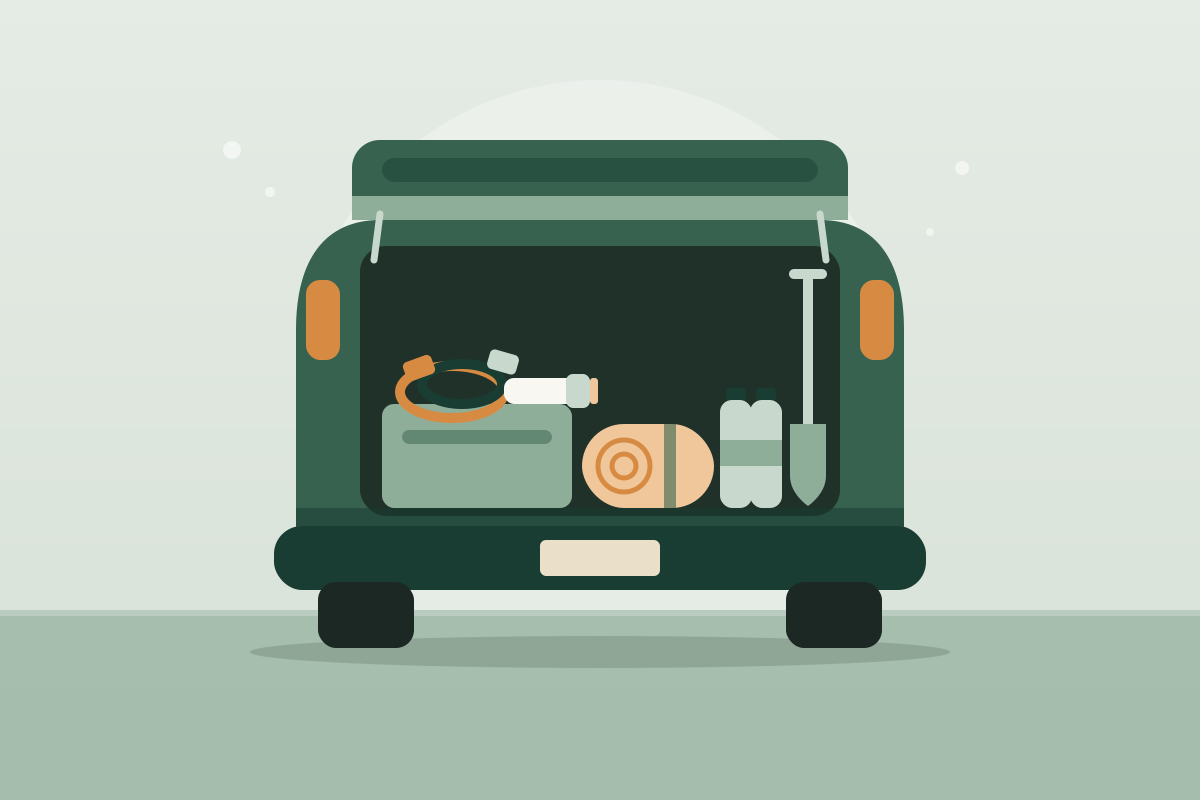
On this page
Key takeaways
- Ready.gov's car kit basics include jumper cables, flares or a reflective triangle, an ice scraper, a car phone charger, a blanket, a map, and cat litter or sand for traction.
- For winter, the National Weather Service adds blankets or sleeping bags, extra clothing, high-calorie food, water, a shovel, a flashlight with extra batteries, and a first aid kit.
- If you're stranded in snow, stay in the vehicle, run the engine about 10 minutes each hour for heat, crack a window, and keep the exhaust pipe clear of snow to avoid carbon monoxide poisoning.
- In hot weather, never leave a child or pet in a parked car; NHTSA says interior temperatures can rise 20 degrees in about 10 minutes.
- Keep your gas tank near full in winter and check your kit at least twice a year.
A dead battery, a flat tire, or a highway closed by snow can leave you waiting in your car for hours. A small, well-chosen kit in the trunk turns that from a dangerous situation into an uncomfortable one.
This checklist combines guidance from Ready.gov, the National Highway Traffic Safety Administration (NHTSA), and the National Weather Service (NWS). Start with the year-round basics, then add the winter or summer supplies that fit your climate.
10 minutes
per hour to run the engine for heat if stranded in winter (NWS)
Near full
gas tank in winter, to avoid fuel line ice
20°F in 10 min
how fast a parked car can heat up (NHTSA)
The year-round car emergency kit
These items handle the most common roadside problems in any season. Ready.gov's car safety list covers jumper cables, flares or a reflective triangle, an ice scraper, a car phone charger, a blanket, a map, and cat litter or sand for traction. NHTSA's list adds a flashlight, a first aid kit, water, and non-perishable food.
Year-round car kit
0 of 16
Packing tips
- Use one sturdy bin or bag so the kit doesn't roll around and you can move it between cars.
- Keep the first aid kit and flashlight within reach of the driver's seat if possible, not only in the trunk.
- Avoid temperature-sensitive items in the trunk. Medications, some batteries, and food can degrade in heat. See the first aid kit checklist for what to keep in a car-sized first aid kit.
Winter additions
If you live where it snows or temperatures drop below freezing, add these items from about late fall through early spring. The list follows the NWS "winter storm survival kit" for vehicles and NHTSA's winter driving tips.
Winter car kit additions
0 of 11
Prepare the car itself
The NWS recommends fully checking and winterizing your vehicle before the season starts:
- Check fluid levels, lights, heater, and windshield wipers.
- Use tires with adequate tread. Ready.gov notes some areas require chains or studs.
- Keep your gas tank near full to avoid ice in the tank and fuel lines and to have fuel for heat if you're stranded.
- Turn off cruise control on icy or snowy roads (Ready.gov).
- Before a trip in bad weather, check conditions (many states offer road information by calling 511), avoid traveling alone, and tell someone your route and timetable.
If you're stranded in winter
Getting stuck in snow is when your kit and your decisions matter most. These steps are based on NWS winter storm guidance.
- Stay in the vehicle. Walking in blowing snow can quickly leave you disoriented and lost. Your car is shelter and is easier for rescuers to find.
- Call for help if you have signal. Tell them your location, direction of travel, and how many people are with you.
- Run the engine about 10 minutes each hour for heat. Open a window slightly while it runs for fresh air.
- Clear the exhaust pipe of snow before and while running the engine.
- Be visible. Tie a brightly colored cloth to the antenna or door, turn on the dome light at night while the engine is running, and raise the hood after snow stops falling to show you need help.
- Stay warm and moving. Layer clothing and blankets, huddle with passengers, and move arms and legs to keep blood flowing.
- Watch for frostbite and hypothermia. Ready.gov lists warning signs including numbness and white or grayish-yellow skin for frostbite, and shivering, confusion, slurred speech, or drowsiness for hypothermia.
Summer additions
Heat creates different risks: overheating engines, dehydration, and long waits in the sun on the shoulder of a highway. Add these in hot months, especially if you drive through deserts or remote areas.
Summer car kit additions
0 of 7
Heat safety around cars
NHTSA warns that a parked car can heat up quickly, with temperatures rising 20 degrees in as little as 10 minutes, and that even an outside temperature in the mid-60s can push the inside of a car above 110°F. Cracking a window or parking in the shade does little to change the interior temperature.
- Never leave a child in a parked car, for any length of time. The same goes for pets.
- Always lock your car and keep keys out of children's reach so kids can't climb in.
- Check the back seat every time you leave the car. A change in routine is a common factor when a caregiver forgets a child.
- If you see a child alone in a hot car, call 911 immediately.
Maintaining your car kit
Twice-a-year car kit check (spring and fall)
0 of 7
Linking these checks to the start and end of daylight saving time makes them easy to remember.
Next steps
Pack the year-round basics this week, then add the seasonal items before the weather turns. If you're building other kits too, start with these:
Frequently asked questions
What should I keep in my car for emergencies?
At minimum: jumper cables, flares or reflective triangles, a flashlight with spare batteries, a first aid kit, a phone charger, water, non-perishable snacks, a blanket, and a paper map. Add winter or summer supplies depending on the season and where you live.
What should I do if I get stranded in my car in a snowstorm?
Stay with your vehicle, call for help if you can, and make the car visible to rescuers. Run the engine about 10 minutes each hour for heat with a window slightly open, and keep the exhaust pipe clear of snow to prevent carbon monoxide poisoning.
Is it safe to store bottled water in a car?
Yes, as long as you rotate it. Keep it out of direct sunlight, replace it every few months or per the package date, and expect it may freeze in winter; frozen bottles can be thawed inside the warm cabin.
Why should I keep my gas tank full in winter?
Ready.gov and the National Weather Service both advise keeping the tank near full. It gives you fuel to run the heater if you're stranded and helps prevent ice in the tank and fuel lines.
Sources
- Child Safety: Heatstroke — National Highway Traffic Safety Administration
- Turn Around Don't Drown — National Weather Service
- Car Safety — Ready.gov
- Winter Weather — Ready.gov
- Winter Driving Tips — National Highway Traffic Safety Administration
- Before a Winter Storm — National Weather Service
- During a Winter Storm — National Weather Service
The Prep & Survive team researches, writes, and fact-checks every guide against current guidance from FEMA, Ready.gov, the CDC, the American Red Cross, and USDA food safety experts. We update articles when official recommendations change.
How we research and fact-checkGet one practical preparedness step every other week
Join The Ready Brief for checklists, seasonal reminders, and honest gear advice.